Orvala — Blog — Sales
Why a configurator sells upgrades that a price list cannot
An options list is a cost. The same options seen on the actual building are a choice. What changes commercially when a buyer specifies the home themselves.
Every developer selling a house type with options has the same document: a specification sheet with a premium column. Oak instead of laminate, plus so much. Stone worktop, plus so much. It converts badly, and it converts badly for a reason that has nothing to do with the price.
A written option is a cost. The buyer reads a number and subtracts it from their budget. The same option seen on their actual house is a choice, and a choice is something people get attached to.
The configurator changes who is doing the work
In the price-list version, the sales team is arguing for the upgrade and the buyer is resisting. In the configurator version, the buyer picks the charred larch because they like it, and then finds out what it costs. Nobody argued. The order of those two events is the entire mechanism.
It also changes what the buyer is doing on your website. Scrolling a gallery is passive and ends when the images run out. Choosing a cladding, then a roof, then looking at it from the terrace is an activity, and activities have no natural end. The time-on-page difference is not subtle.
Ownership starts before the deposit
There is a well-worn effect in retail — people value a thing more once they have configured it, even when nothing was bought. It is why car manufacturers put a configurator on the front page and why kitchen showrooms let you move the units around.
Property has the strongest version of this and uses it least. A buyer who has specified a home has stopped evaluating your scheme against the one down the road and started picturing themselves in a specific version of yours. That is a different conversation, and it is a conversation your sales team gets to start rather than create.
By the time somebody has picked the cladding, the roof and the glazing, they are no longer comparing you to anybody.
The enquiry arrives already specified
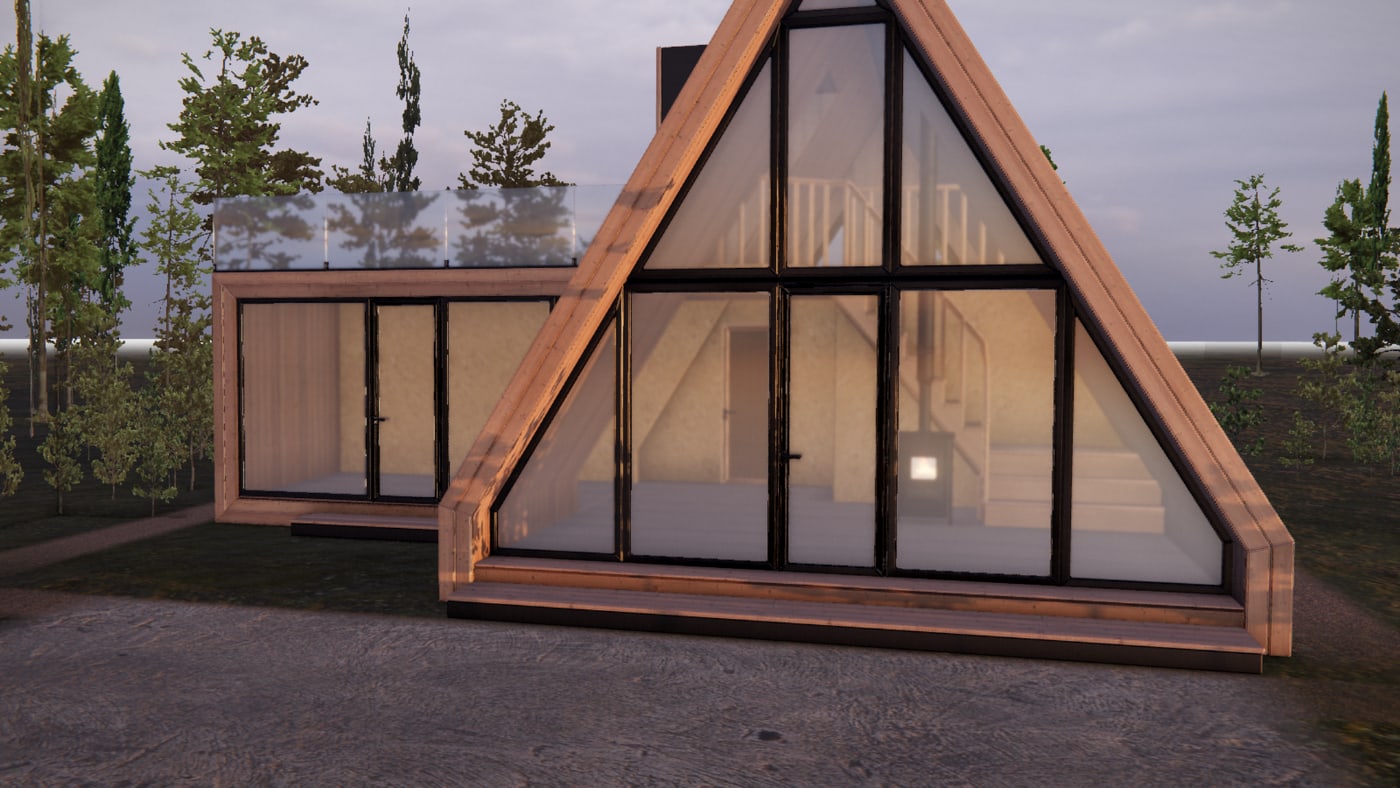
This is the part that sales directors react to, and it is the most practical benefit of the lot. An enquiry from a configurator is not "I'm interested in Plot 14". It is Plot 14 in charred larch with a zinc roof and bronze glazing, plus a link that reopens exactly what they were looking at.
Your first call starts at "about the bronze glazing" instead of "tell me what you're looking for". The qualification that normally eats the first fifteen minutes has already happened, and it happened in the buyer's own time.
It kills the variant render bill
Six cladding options across five camera angles is thirty images. The day the range changes — a supplier discontinues a finish, marketing adds a colour — it is thirty more. Most developers quietly solve this by showing one specification and describing the rest in words, which is exactly the situation that makes options hard to sell.
A real-time scene covers every combination from every angle because it is not producing images in advance. Adding a finish is a data change you can make in an afternoon, and retiring one does not leave a stale render on page four of the brochure.
Where it does and does not work
A configurator earns its money where the options are visible and the range is real. It is weaker where the choice is a number on a contract rather than something you can see.
- Strong: house types with exterior finish ranges, apartment interiors with flooring and joinery packages, anything with a furnished versus unfurnished decision.
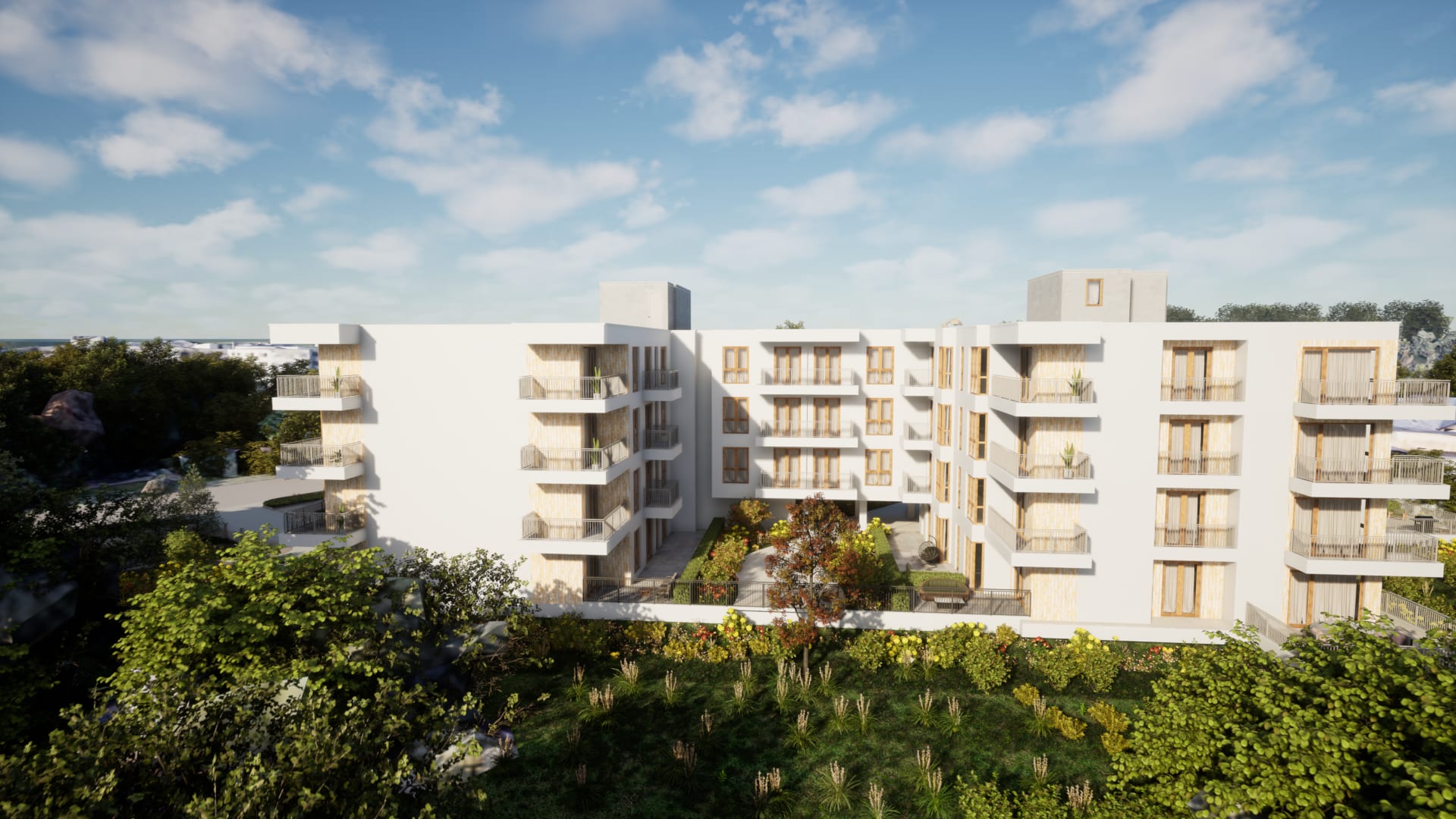
- Strong: masterplans where the choice is which house type goes on which plot.
- Weaker: schemes with one fixed specification and no upgrade path. There is nothing to configure, and the honest answer is that you do not need one.
- Watch the scope: swapping a material is cheap, swapping a roof form is a second model. Know which of your options is which before you publish the range.
What to measure
If you build one, instrument it. The two numbers worth watching are the share of enquiries that arrive with a specification attached, and the upgrade take-up among those buyers versus the ones who came through the standard form. If the second number is not meaningfully higher within a quarter, the option range is probably the problem rather than the tool.
Book a call
See your own building running like this.
Send us the development — units, floors, and whatever drawings or model you already have. We come back with what it would look like, what it would cost, and how long it would take.