Orvala — Blog — Product
Sofa and furniture configurators: selling size and fabric online
Upholstery is bought on size and fabric, the two things a photo cannot show in every combination. How a 3D sofa configurator solves that, and what to get right.
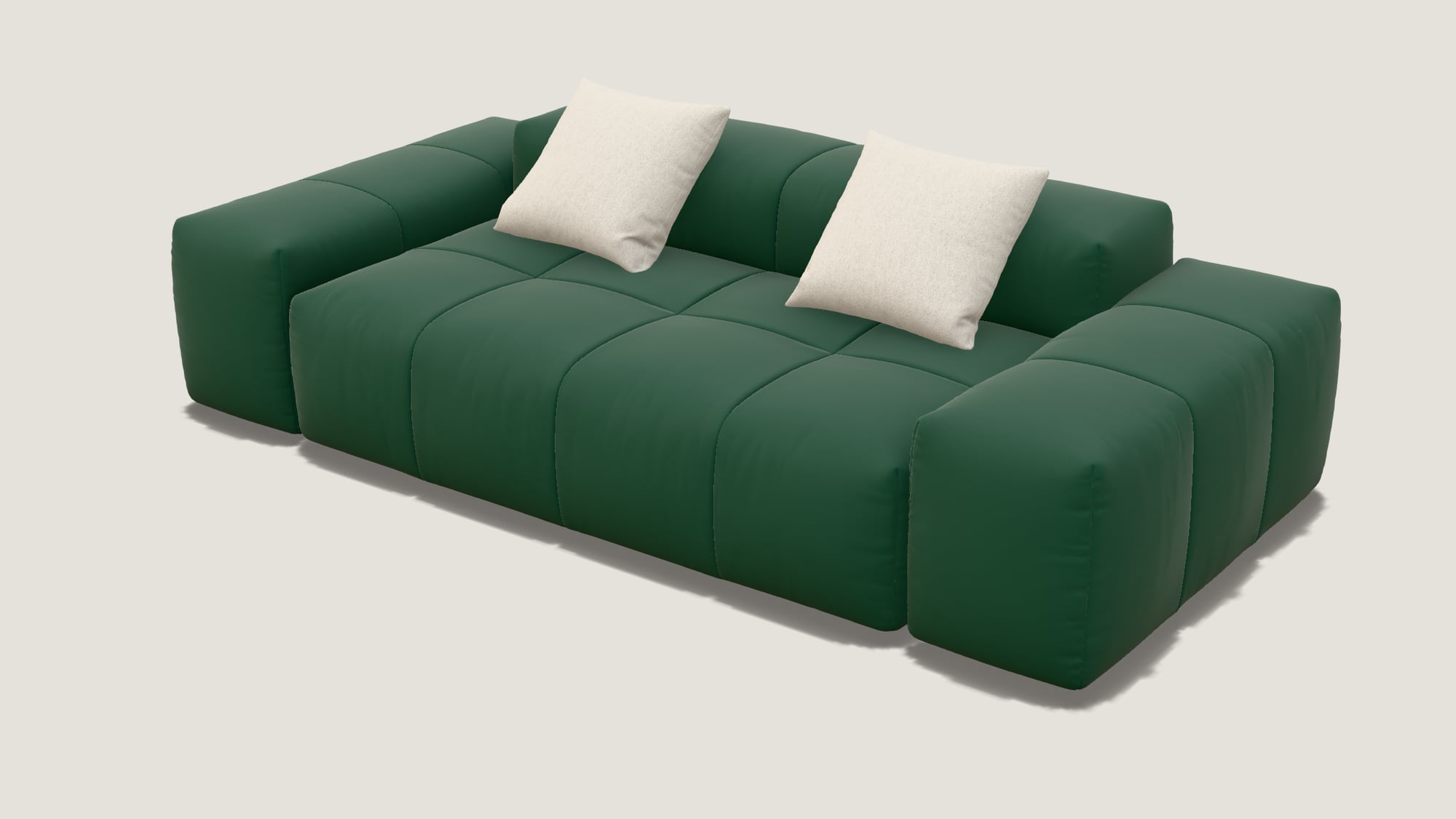
A modular sofa range has a photography problem. Five sizes, four arm layouts and thirty colours is six hundred sofas before anyone adds a cushion. Nobody photographs six hundred sofas, so the website shows a handful and asks the buyer to imagine the rest. For a purchase this large, that is exactly where the doubt creeps in.
A 3D furniture configurator removes the imagining. The buyer builds the actual sofa they want, in the actual fabric, and sees it from every side before they ask about delivery.
Size has to be rebuilt, not stretched
The easy mistake is to scale one sofa model to make it bigger. It looks wrong immediately: the arms get fat, the seams drift and the cushions stretch. A modular sofa is made of modules, and the configurator has to assemble the real modules for each size, with the arms attached where they really attach. The exposed ends matter most. If a buyer removes an arm, the end of the seat must look finished, because that is precisely where they will look.
Fabric is a texture problem, and a scale problem
Bouclé, linen, velvet and chenille are told apart by their surface, not their colour. A believable fabric needs its weave at the correct scale on every part of the sofa, running in the right direction on the seat, the back and the arms. Velvet needs its sheen to change with the angle. Colour on its own is the easy part. Texture at scale is what makes someone trust that the sofa on screen is the sofa that arrives.
Nobody buys a bouclé sofa because it is beige. They buy it because it looks soft.
Show it the way people decide
Buyers check a sofa from the front, then from the side to judge depth, then from above to see whether it fits the room. Fixed camera views for each of those, plus free rotation, cover how people actually look. Showing the dimensions on demand answers the question that otherwise turns into an email.
Keep the price next to the choice
Fabric grades, extra modules and cushions all change the price. When the total updates as each option changes, the buyer makes the trade-off themselves, and the enquiry that follows is about a sofa they can afford. Hiding the price until the end tends to lose people at exactly the moment they have become attached.
What the enquiry should contain
- Size and arm layout, in your product codes.
- Fabric and colour for the body, and for any contrast cushions.
- The price the buyer saw.
- A link that reopens the exact sofa, so the showroom can pick up where the buyer left off.
Try the live configurators
Five working demos, open to anyone, no sign-up.
Barn House 07 →
Atelier L-Kitchen →
Haven modular sofa →
Lobby Studio →
Pergola Studio →
Discuss your project
See your own building running like this.
Send us the development — units, floors, and whatever drawings or model you already have. We come back with what it would look like, what it would cost, and how long it would take.